Everything You Need to Know About Professional Shrub Trimming in the DFW Area
Walk through any well-maintained neighborhood in Grapevine, Southlake, Colleyville, or Keller and you'll notice the same thing about the yards that look the best: the shrubs are clean, defined, and shaped with intention. They frame the home. They create structure in garden beds. They look like they were put there on purpose — and like someone is taking care of them.
That result doesn't happen by accident. It comes from regular, professional shrub trimming done at the right time, with the right tools, by a team that understands what each plant needs.
At RP Lawn Service, shrub trimming is one of the most frequently requested services we provide to homeowners across the DFW area. We've been trimming shrubs in Fort Worth, Arlington, Bedford, Grapevine, Southlake, and surrounding North Texas communities for over 25 years. In that time, we've developed a thorough understanding of the shrub varieties most common in DFW landscapes, the unique demands of the North Texas climate, and the techniques that produce the best long-term results.
This guide covers everything a DFW homeowner should know about professional shrub trimming — what it involves, why it matters, how often it should happen, and what sets professional work apart from DIY attempts.
Understanding Shrub Trimming: What It Is and What It Isn't
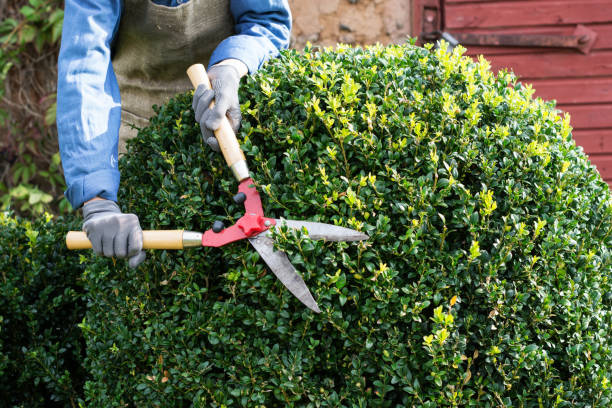
Shrub trimming is the regular shaping and maintenance of shrubs to keep them looking neat, defined, and proportionate within the landscape. It typically involves clipping back new growth with hedge trimmers or hand shears to maintain an established form — whether that's a rounded natural shape, a formal geometric hedge, or a specific architectural silhouette.
Trimming is primarily an aesthetic service, though it also plays an important role in plant health by preventing the outer canopy from becoming so dense that it blocks light and air from the interior of the plant.
It's important to distinguish trimming from pruning. Pruning is a deeper intervention — it addresses the structural and health-related needs of a plant by selectively removing branches to improve architecture, eliminate disease, or manage size. Trimming is more routine and more frequent. Both are part of a complete landscape maintenance program, and both are services RP Lawn Service provides.
Why Regular Shrub Trimming Is Essential in North Texas
North Texas has one of the most aggressive growing seasons of any region in the country. The combination of warm temperatures, periods of heavy rainfall, and long growing windows from March through October means that shrubs in DFW landscapes can put on significant new growth very quickly. Without regular trimming, a shrub that looked neat and proportionate in spring can be noticeably overgrown by midsummer.
Beyond the visual impact, overgrown shrubs create several practical problems:
Dense, untrimmed growth blocks light and air from penetrating the interior of the plant, leading to bare, leggy growth inside and a plant that looks full from the outside but is actually struggling. Regular trimming maintains the balance between outer growth and interior health.
Overgrown shrubs that have grown into one another create a continuous mass that's visually unappealing and difficult to manage. Shrubs that should be distinct, well-separated plantings become a jumbled thicket.
Shrubs that have grown too large for their space begin to encroach on walkways, driveways, windows, foundation areas, and neighboring plants. Once shrubs have significantly overgrown their intended space, restoring them requires more aggressive intervention — and sometimes the result is a plant that never looks quite right again.
Dense, untrimmed shrubs create ideal habitat for insects and rodents — particularly along foundation lines, which is exactly where most DFW homeowners have their heaviest shrub plantings.
Regular shrub trimming prevents all of these problems by keeping plants in their optimal size and shape throughout the growing season.
How Often Should Shrubs Be Trimmed in DFW?
The right trimming frequency depends on the specific shrub varieties in your landscape, the look you want to maintain, and the time of year. Here are general guidelines for North Texas:
During the active growing season — March through October — most shrubs benefit from trimming every four to six weeks. This keeps growth manageable, maintains clean lines, and prevents the overgrown look from setting in between visits.
Fast-growing shrubs like Loropetalum, Wax Myrtle, and Ligustrum may need trimming every three to four weeks during peak spring and early summer growth.
Formal hedges that are maintained with precise, geometric shapes generally need more frequent attention — sometimes every three to four weeks — to stay looking crisp and defined.
During fall and winter, trimming frequency decreases naturally as growth slows. This is also the period when harder corrective cuts can be made if needed, since the plants are not under the stress of active summer growth.
Our team at RP Lawn Service creates customized trimming schedules based on the specific plants in your landscape and your maintenance goals.
The Most Common Shrubs in DFW Landscapes — And What They Need
Understanding the shrubs in your yard is the first step toward maintaining them properly. Here's a guide to the most common shrubs we work with across North Texas:
Knockout Roses
Possibly the most popular shrub in DFW landscapes. Knockout Roses are tough, heat-tolerant, and produce prolific blooms from spring through fall. They benefit from regular light trimming during the growing season to remove spent blooms and encourage continuous flowering. A hard cut — back to about 12 to 18 inches — in late winter or early spring stimulates vigorous new growth with the heaviest bloom production.
Indian Hawthorn
A DFW staple for low borders and mass plantings. Indian Hawthorn has a naturally mounding form and produces beautiful spring blooms. Light trimming after the spring bloom maintains shape without sacrificing next year's flowers. Avoid heavy trimming in summer or fall.
Boxwood
The go-to choice for formal hedges and defined borders across North Texas. Boxwood responds very well to regular shearing and can be maintained in virtually any shape. It benefits from at least two to three trimming visits per year in DFW, with attention to airflow through the canopy to prevent fungal issues during humid periods.
Loropetalum
One of the fastest-growing shrubs in DFW landscapes, and one of the most commonly overgrown. Loropetalum can quickly exceed its intended space and overwhelm neighboring plants. Regular trimming — every four to six weeks during the growing season — is essential for keeping it in proportion. It responds well to trimming and maintains its attractive burgundy foliage with regular maintenance.
Red Tip Photinia
A popular choice for privacy screens and large borders. Red Tip Photinia is fast-growing and responds well to trimming, which also helps manage the Entomosporium fungal disease that commonly affects it in DFW's humid spring conditions. Regular trimming improves air circulation and reduces disease pressure.
Wax Myrtle
Often used as a large screening shrub or informal hedge. Wax Myrtle grows quickly in North Texas and can become very large without regular trimming. It tolerates trimming well and can be maintained at almost any size.
Nandina
Extremely common in DFW foundation plantings. Without regular attention, Nandina becomes leggy and top-heavy, with bare canes at the base and a cluster of foliage only at the top. Regular trimming — including selective removal of the oldest canes — maintains a full, attractive appearance from base to top.
Dwarf Yaupon Holly
A tough, adaptable shrub that performs well across all DFW soil types. Yaupon Holly is often used for low borders and foundation plantings. It responds very well to shearing and can be maintained in formal or informal shapes.
What Professional Shrub Trimming Looks Like vs. DIY
The difference between professional shrub trimming and a homeowner working with a pair of hedge trimmers is immediately visible — and it goes deeper than just the finished appearance.
Tools and technique. Professional shrub trimming uses properly sharpened, well-maintained tools. Sharp blades make clean cuts that heal quickly. Dull blades — which is what most homeowners are working with after a season or two without blade maintenance — tear plant tissue and leave ragged cuts that are slow to heal and vulnerable to disease.
Knowledge of plant-specific needs. Not all shrubs should be trimmed the same way. Some produce their best growth and flowering when trimmed back hard. Others need light shaping only. Some should never be trimmed in fall because new growth would be vulnerable to freeze damage. Professional shrub trimming applies the right approach for each plant.
Proportion and form. Professional shrub trimming maintains the natural or intended form of each plant within the context of the overall landscape. This requires an eye for proportion — how tall a shrub should be relative to the structure behind it, how wide it should be relative to neighboring plants, how its shape relates to the overall design of the bed.
Cleanup. Professional trimming includes complete cleanup of all clippings and debris. Leaving clippings on shrubs and in beds is not just unsightly — decomposing organic material can create conditions for disease.
Shrub Trimming and Property Value in DFW
In high-value communities across the DFW area — Southlake, Colleyville, Westlake, Keller — well-maintained landscaping is directly connected to property value. Curb appeal research consistently shows that professional landscaping maintenance can add meaningful value to a home's market price and significantly reduce days on market when selling.
Neatly trimmed shrubs are one of the most visible elements of landscape maintenance from the street. A home with professionally trimmed foundation plantings and defined beds looks cared for in a way that immediately registers with potential buyers, appraisers, and neighbors.
Combining Shrub Trimming With Other Lawn Services
Shrub trimming delivers the best results when it's part of a comprehensive lawn care program. At RP Lawn Service, we provide shrub trimming alongside:
Pruning — for the deeper structural and health-related work that goes beyond surface trimming.
Mulching — fresh mulch in trimmed beds makes the entire landscape look finished and polished.
Lawn maintenance — a well-mowed lawn with clean edges and trimmed shrubs is the complete package for maximum curb appeal.
SOD installation — for homeowners who want to pair a refreshed lawn with updated shrub beds for a complete landscape transformation.
Serving DFW Homeowners and Commercial Properties for Over 25 Years
RP Lawn Service has been providing professional shrub trimming to homeowners and commercial properties across the DFW area since 1995. Our second-generation, family-owned team brings the same commitment to quality and personal attention to every trimming visit that our clients have relied on for decades.
We serve Fort Worth, Arlington, Bedford, Colleyville, Grapevine, Grand Prairie, Irving, Euless, Hurst, Southlake, Keller, Westlake, and surrounding North Texas communities.

Ready to Get Your Shrubs Looking Their Best?
Don't let overgrown, out-of-shape shrubs drag down the appearance of your property. Professional shrub trimming from RP Lawn Service will restore the clean, defined look your landscape deserves — and keep it looking that way all season long.
Visit https://www.rplawnservices.com/contact to schedule your free consultation today.


