SOD Installation 101: What DFW Homeowners Need to Know Before They Lay New Grass
There's something immediately satisfying about fresh sod. One day you have a patchy, bare, or struggling lawn — and the next, you have a full, green carpet of grass that looks like it's been there for years. It's one of the fastest and most dramatic transformations available to any homeowner, and in the DFW area, professional SOD installation is one of the most requested services we provide at RP Lawn Service.
But sod installation done right requires more than just rolling out grass and watering it. The prep work, the timing, the grass selection, and the post-installation care all play critical roles in whether your new lawn thrives or struggles. This guide breaks down everything you need to know.
Why Choose Sod Over Seed?
In North Texas, sod is far and away the preferred method for establishing a new lawn or repairing damaged turf — and for good reason.
Seed takes time. You're looking at weeks of careful watering before germination, followed by months of growth before the lawn fills in enough to be functional. During that time, the bare or lightly covered soil is vulnerable to erosion, weed invasion, and foot traffic damage. For DFW homeowners who want results quickly and reliably, seed is rarely the right answer.
Sod gives you an instant lawn. The turf is grown in controlled conditions by professional sod farms, harvested at the right time, and installed on your property in full, dense rolls. With proper installation and care, you can have a fully functional, beautiful lawn within weeks — not months.
Sod also comes with an established root system, which gives it a significant head start over seed. As long as it's watered correctly in the establishment period, properly installed sod bonds to the underlying soil quickly and creates a dense, weed-resistant turf.
Best Grass Types for DFW Sod Installation
Not all sod is appropriate for every DFW property. Choosing the right grass type for your specific conditions is one of the most important decisions in the process.
Bermuda Grass — The dominant turf type across the DFW area for good reason. Bermuda grass is heat-tolerant, drought-resistant once established, and recovers quickly from damage. It thrives in full sun and is the go-to choice for most front and back yards in Fort Worth, Arlington, Grapevine, and surrounding communities. It goes dormant and turns brown in winter, then greens up reliably in spring.
St. Augustine Grass — If your yard has significant shade — from mature trees, a covered patio, or neighboring structures — St. Augustine is the better choice. It's shade-tolerant, grows quickly, and produces a dense, lush appearance that many homeowners prefer. It requires slightly more water than Bermuda and is more sensitive to hard freezes.
Zoysia Grass — A slower-growing option that produces a thick, dense turf with excellent weed resistance once established. Zoysia is more shade-tolerant than Bermuda and has a finer texture that many homeowners find attractive. It's gaining popularity in DFW landscapes for its low-maintenance characteristics once it's fully established.
The Importance of Proper Site Preparation
This is where professional SOD installation separates itself from DIY attempts. Sod laid on poorly prepared ground fails — it doesn't root properly, dries out unevenly, and develops gaps and dead patches within weeks.
Proper site preparation for sod installation in DFW includes:
Removing existing vegetation — Old turf, weeds, and debris need to be cleared before new sod goes down. Leaving existing vegetation in place creates a layer between the sod and the soil that prevents proper rooting.
Grading and leveling — The surface needs to be graded to ensure proper drainage. Low spots collect water and create soggy conditions that rot sod roots. The finished grade should slope slightly away from structures to direct water off the property.
Soil preparation — In DFW's heavy clay soils, some amendment of the top layer helps the new sod establish. A light application of compost or sand can improve drainage and create a better environment for root development.
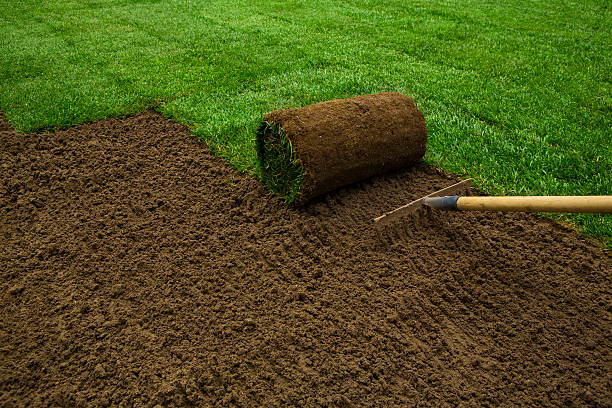
Final raking — Before the sod goes down, the prepared soil surface should be raked smooth to eliminate bumps, divots, and air pockets. An uneven subgrade creates an uneven lawn that never looks or performs as well as it should.
Timing Your SOD Installation in DFW
In North Texas, the timing of sod installation makes a real difference in how quickly and successfully the turf establishes.
Bermuda sod is best installed in late spring through summer — when soil temperatures are warm and the grass is in its active growing phase. This gives it the best possible conditions for rapid rooting and establishment. Installing Bermuda in fall or winter means it goes dormant shortly after installation, which significantly delays establishment.
St. Augustine and Zoysia can be installed successfully from spring through early fall — as long as there's enough warm weather ahead for the sod to root before temperatures drop.
Our team at RP Lawn Service can advise you on the ideal installation window based on the current time of year and the specific grass type you're selecting.
Post-Installation Care: The Critical First Weeks
Even the best installation job won't produce a healthy lawn if the post-installation care is neglected. The first two to three weeks after sod is installed are the most critical for establishment.
Watering is the top priority. Newly installed sod needs to be kept consistently moist — not waterlogged, but consistently moist — until it roots into the underlying soil. In the DFW summer heat, this typically means watering once or twice daily for the first one to two weeks, then tapering off as the sod begins to root.
Avoid foot traffic on new sod for at least two weeks. Heavy traffic before the sod has rooted can shift the pieces, create gaps, and damage the developing root system.
First mowing should happen when the grass has rooted well enough that it can't be easily pulled up — typically around two to three weeks after installation, depending on conditions.
RP Lawn Service: Professional SOD Installation Across DFW
Our team has been installing sod for homeowners and commercial property owners across the DFW area for over 25 years. We handle everything — site preparation, grading, sod selection, installation, and post-installation guidance — so you get a finished lawn that's set up for long-term success.
We serve Fort Worth, Arlington, Bedford, Colleyville, Grapevine, Grand Prairie, Irving, Euless, Hurst, Southlake, Keller, Westlake, and surrounding North Texas communities.

Ready for a Beautiful New Lawn?
Stop living with a patchy, bare, or struggling yard. Professional SOD installation from RP Lawn Service gives you a full, healthy, beautiful lawn faster than any other method.
Visit https://www.rplawnservices.com/contact to schedule your free consultation and get a personalized estimate for your property.


