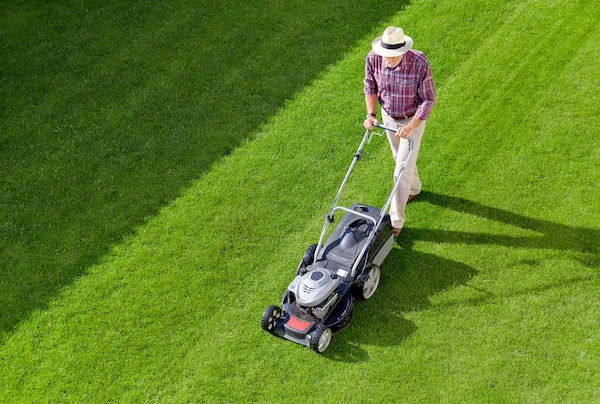
Many homeowners cut their grass shorter hoping it will stay neat longer. At first, it looks clean and tidy—but within days, the lawn looks stressed, thin, or uneven. Brown patches appear faster, weeds creep in, and recovery slows. If cutting your grass shorter keeps making your lawn worse, it’s not bad luck. It’s a mowing height problem.
Grass health depends heavily on how much blade is left behind.
Grass blades do more than affect appearance. They protect soil, regulate moisture, and fuel root growth. When too much blade is removed, the lawn loses its ability to protect itself.
Short mowing creates stress that builds over time.
Grass relies on its blades to produce energy. Cutting too low forces the plant to focus on survival instead of root growth.
This leads to:
Weak roots mean weak lawns.
Short grass exposes soil directly to sunlight. This increases evaporation and dries out the root zone quickly.
Exposed soil causes:
Grass height helps regulate soil temperature.
Healthy lawns crowd out weeds by staying dense. Cutting grass too short reduces density and opens space at the soil level.
Thin turf leads to:
Weeds thrive where grass is stressed.
Uneven ground combined with low mowing often leads to scalping—where grass is cut down to the stem or soil.
Scalping causes:
Scalped grass struggles to recover.
Low mowing removes protection and energy every time the lawn is cut. Without enough blade left behind, recovery slows with each cycle.
This results in:
Height is critical for resilience.
Homeowners often mow lower to “fix” fast growth or uneven appearance. Unfortunately, this worsens the underlying problem and accelerates decline.
This loop leads to:
Lower isn’t cleaner—it’s riskier.
Healthy lawns rely on consistent mowing height that supports steady growth and recovery.
Proper height allows:
Height consistency creates stability.

If your lawn looks worse every time you mow, mowing height is likely the issue—not effort or frequency. Cutting grass too short prevents the lawn from ever building strength.
If mowing is making your lawn worse, RP Lawn Service can help. Book a free consultation.


