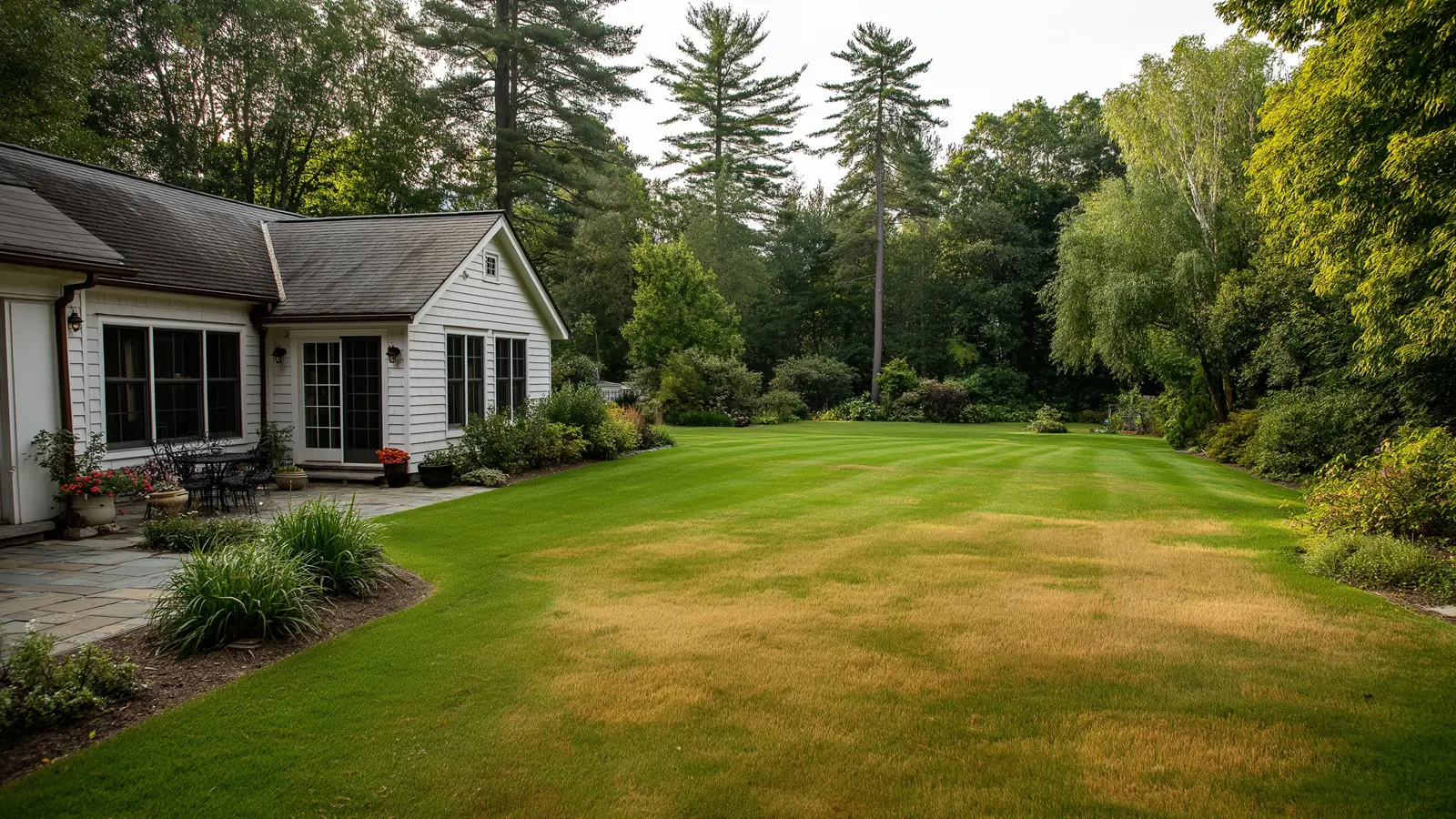
It’s easy to think missing a week or two of lawn care won’t matter much. Life gets busy, weather changes, and lawn maintenance can slip down the priority list. But if your lawn starts declining after inconsistent care, it’s not a coincidence. Skipping routine lawn maintenance often creates problems that take far more time and effort to fix later.
Lawns thrive on consistency. When that consistency breaks, stress builds quietly—then shows up all at once.
Grass relies on predictable care to grow evenly and recover from stress. Mowing, basic upkeep, and general maintenance all work together to support healthy growth.
When maintenance becomes irregular, the lawn loses its rhythm.
When mowing is skipped, grass grows taller than it should. Cutting it back later removes too much blade at once and shocks the turf.
This leads to:
Regular mowing prevents stress from heavy cuts.
Inconsistent maintenance allows some areas to grow faster than others. Once uneven growth sets in, mowing highlights the problem instead of fixing it.
Uneven growth causes:
Consistency keeps growth balanced.
Healthy, well-maintained grass naturally crowds out weeds. When maintenance slips, grass weakens and weeds move in.
This results in:
Routine care helps grass stay dominant.
Each skipped maintenance cycle adds stress. Without regular care, grass doesn’t get the chance to recover properly between growth periods.
Compounded stress leads to:
Small lapses add up quickly.
The longer routine maintenance is skipped, the more difficult recovery becomes. What could have been prevented turns into a larger issue.
Delayed care often leads to:
Preventative care is always easier than repair.
Many homeowners try to “catch up” by mowing lower or doing extra work all at once. Unfortunately, this often adds more stress instead of solving the problem.
Catch-up care can:
Lawns respond best to steady, predictable care.
Lawns that receive routine care tend to:
Consistency builds momentum instead of damage.

If your lawn keeps declining after periods of inconsistent care, it’s a sign that regular maintenance is what’s missing—not effort or intention.
If inconsistent lawn care keeps setting your yard back, RP Lawn Service can help. Book a free consultation.


