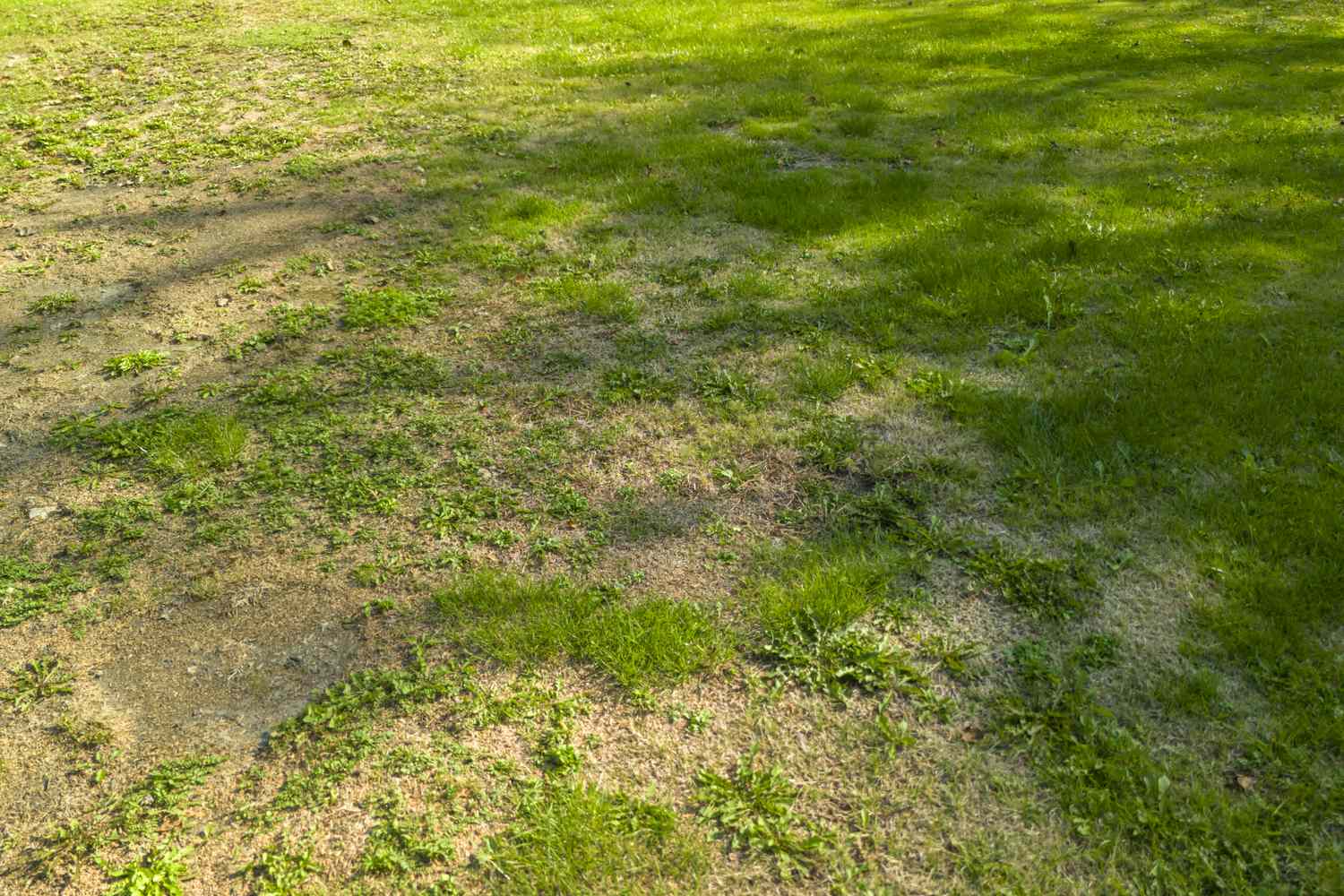
No matter how often you mow or water, your lawn just doesn’t look full. Some areas look decent, others are thin or uneven, and the whole yard feels patchy instead of complete. If your lawn always looks patchy, it’s not just cosmetic—it’s a sign that growth isn’t happening evenly.
A full lawn is built from consistent conditions across the entire yard. When that’s missing, patchiness shows up fast.
Grass needs the right combination of soil, moisture, and root strength to spread and fill in. When any of those are inconsistent, certain areas fall behind.
Patchy lawns are usually uneven lawns beneath the surface.
Different areas of your lawn may have different soil quality, compaction levels, or drainage.
This causes:
Soil consistency is key to full coverage.
Grass spreads through its root system. When roots are shallow, grass can survive but won’t expand into thin areas.
Shallow roots lead to:
Roots determine how full your lawn becomes.
Compacted soil restricts root movement and nutrient flow, preventing grass from spreading into those areas.
Compaction results in:
Grass won’t grow where roots can’t move.
Even with regular watering, some areas absorb more moisture than others.
This leads to:
Water needs to reach all areas evenly.
Heat, mowing, and foot traffic stress grass. When stress is high, grass focuses on survival instead of spreading.
Ongoing stress causes:
Grass must be healthy to expand.
Without correcting the underlying issues, the same weak areas continue to fall behind. Over time, patchiness becomes more noticeable.
Ignoring the problem leads to:
Patchiness doesn’t fix itself.
Adding seed may help temporarily, but if soil and root conditions aren’t improved, new grass struggles to survive.
Seeding fails when:
The environment has to support new growth.
Lawns that look full and consistent typically have:
These lawns don’t leave room for patchiness.

If your lawn always looks patchy no matter what you do, it’s a sign that the foundation needs attention before grass can fully grow in.
If your lawn won’t fill in evenly, RP Lawn Service can help. Book a free consultation.


