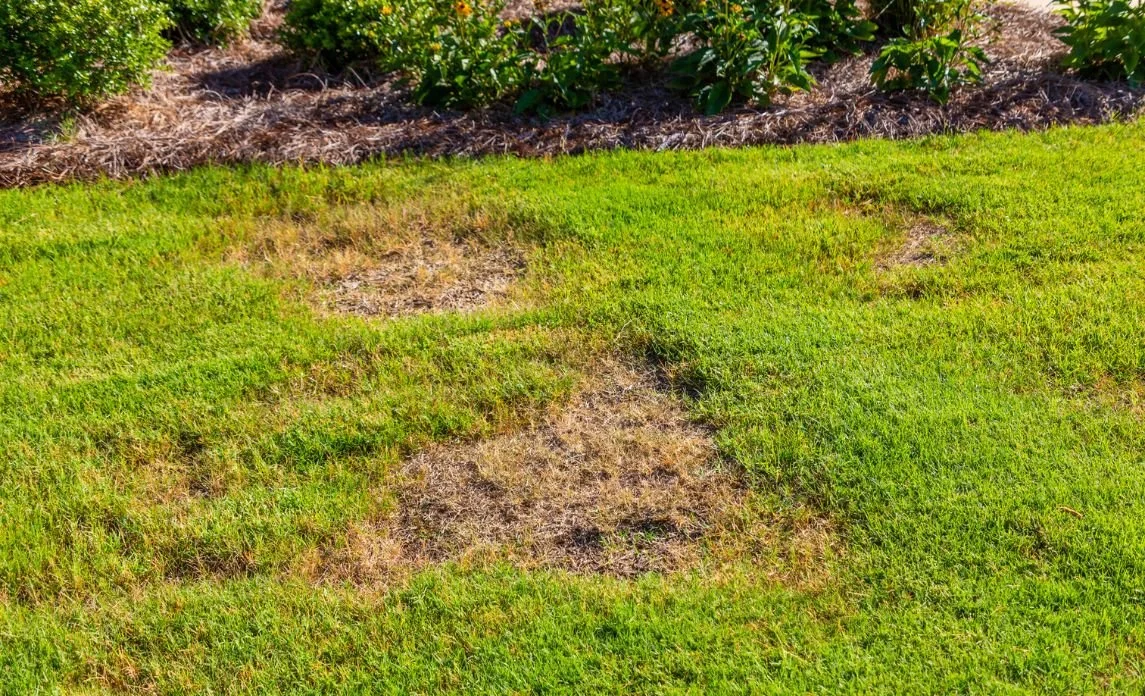
Bare spots are one of the most frustrating lawn problems. You mow, water, and wait—yet those patches never seem to fill in. Sometimes they even get larger over time. If your lawn always has bare spots that never recover, it’s not because grass can’t grow there. It’s because something is preventing it from taking hold.
Grass fills in when conditions allow it to spread. When it doesn’t, the issue is usually beneath the surface.
Grass spreads through roots and lateral growth. When roots are weak or the soil is stressed, grass can survive around a bare spot but can’t expand into it.
Bare areas signal blocked growth.
Compacted soil leaves little room for roots to grow. Grass struggles to establish or spread into these areas.
Compaction leads to:
Without soil space, grass can’t fill in.
Paths, play zones, and high-use areas experience constant pressure. Grass in these spots can’t recover fast enough to spread.
Traffic causes:
Without recovery time, grass loses ground.
Some spots dry out too quickly or stay wet too long. Both conditions prevent roots from establishing.
Moisture issues result in:
Consistent moisture is key to recovery.
When surrounding grass is already thin, it lacks the strength to spread laterally into bare areas.
Thin turf leads to:
Density supports expansion.
Heat, mowing, and environmental stress limit growth. When grass is stressed, spreading stops.
Ongoing stress causes:
Grass must be healthy to expand.
Adding seed may help briefly, but without correcting soil and stress issues, new grass struggles to survive.
Reseeding fails when:
Seeds need the right environment to take hold.
Once a bare spot forms, surrounding grass faces more stress. Soil exposure increases heat and moisture loss, making recovery harder.
Ignoring bare spots leads to:
Bare spots rarely fix themselves.

If bare areas stay empty season after season, it’s a sign that the lawn’s foundation needs support before grass can spread.
If bare spots won’t fill in, RP Lawn Service can help. Book a free consultation.


