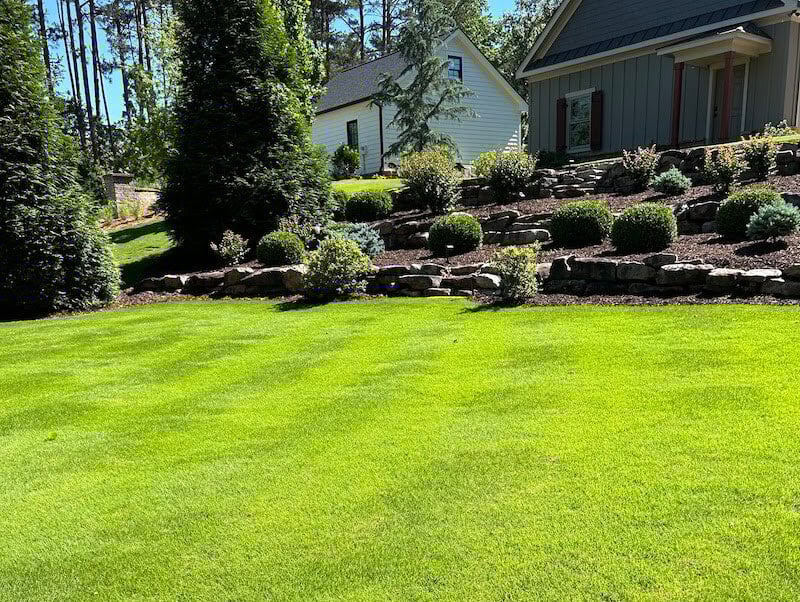
You mow regularly, try to stay on schedule, and put real effort into your lawn—yet it never seems to improve. The same problems keep resurfacing, and progress feels minimal at best. If your lawn care efforts never seem to pay off, it’s not because you’re doing nothing. It’s because effort alone doesn’t create results when the lawn’s foundation can’t support improvement.
Lawns don’t reward effort—they reward balance.
Grass responds to conditions, not intentions. When soil health, root strength, and recovery are out of sync, even consistent care struggles to move the lawn forward.
Effort helps only when the lawn can respond to it.
If care is focused on fixing visible problems, the lawn stays in reaction mode.
Reactive care leads to:
Progress comes from stability, not constant fixes.
Above-ground effort can’t overcome weak roots. When roots are shallow or stressed, growth stalls.
Weak roots cause:
Roots determine how much effort pays off.
Compacted or imbalanced soil restricts water, nutrients, and oxygen. Grass can survive—but not thrive.
Poor soil leads to:
Soil sets the ceiling for success.
When some areas improve and others decline, overall progress feels nonexistent.
Uneven conditions cause:
Progress must be uniform to feel rewarding.
Mowing, weather, and foot traffic all add stress. When recovery can’t keep up, effort gets canceled out.
Ongoing stress results in:
Recovery is what turns effort into results.
Adding more tasks, mowing more often, or changing routines repeatedly usually increases stress instead of progress.
More effort often means:
The lawn needs the right support—not more pressure.
When lawns are balanced, homeowners notice:
Effort finally compounds instead of disappearing.

If you’re doing the work but seeing no reward, it’s a sign the lawn’s foundation needs attention before effort can matter.
If your lawn care efforts never seem to pay off, RP Lawn Service can help. Book a free consultation.


