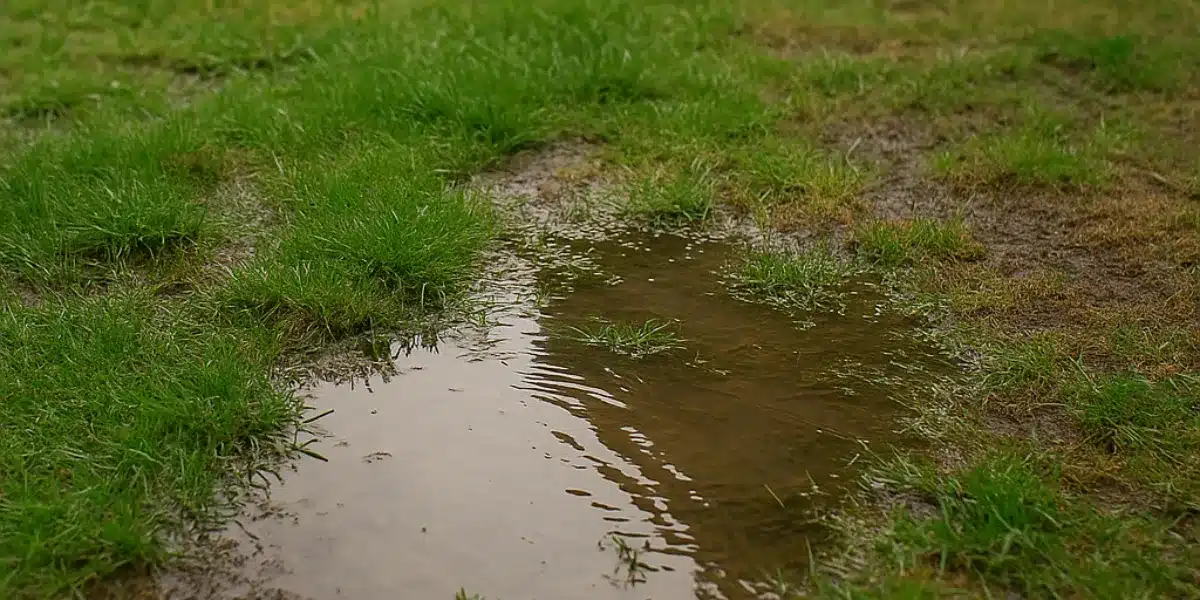
After a good rain, your lawn should absorb water and return to normal fairly quickly. But if you’re dealing with puddles, soggy spots, or areas that stay wet for days, something isn’t working the way it should. If your lawn never drains properly, it’s not just inconvenient—it’s a sign of deeper issues affecting your grass health.
Water should move through your lawn, not sit on top of it.
Excess water doesn’t just make your yard messy—it affects root health, soil structure, and overall lawn performance. Grass needs both water and oxygen to thrive, and poor drainage limits both.
A lawn that stays wet too long is under constant stress.
One of the most common causes of poor drainage is compacted soil. When soil is tightly packed, water can’t soak in.
This leads to:
Compacted soil turns your lawn into a barrier instead of a sponge.
Uneven ground naturally directs water to certain areas. These low spots become collection points after every rain.
This causes:
Water always finds the lowest point—and stays there.
Some soils, especially clay-heavy ones, hold onto water longer than they should.
This results in:
Healthy soil should drain and retain water in balance.
A thick layer of thatch can act like a barrier, stopping water from reaching the soil below.
Excess thatch leads to:
Water needs direct access to the soil.
Healthy roots help create channels in the soil for water to move through. Weak roots reduce that natural drainage system.
Weak root systems cause:
Roots play a major role in drainage.
When water sits on your lawn, it weakens grass and soil structure. Over time, this creates even worse drainage conditions.
Ignoring the issue leads to:
Drainage problems rarely improve on their own.
Temporary solutions like redirecting water or avoiding certain areas may help briefly, but they don’t solve the root cause.
Quick fixes often:
Lasting drainage requires addressing the foundation.
Lawns that drain properly typically have:
These lawns absorb water instead of holding it.

If your lawn never seems to dry out after rain, it’s a sign that water isn’t moving the way it should—and that can lead to bigger problems over time.
If your lawn struggles with drainage, RP Lawn Service can help. Book a free consultation.


