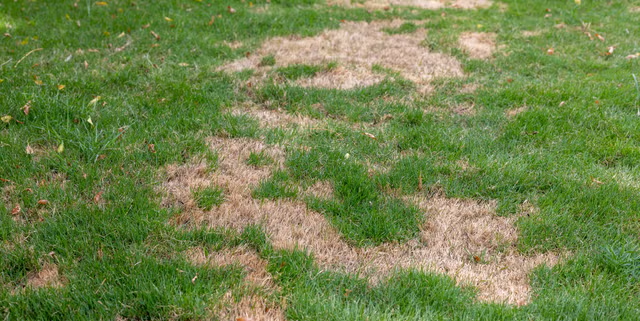
Some lawns just never feel “right.” One area grows too fast, another stays thin. One side dries out quickly, while another stays soggy. No matter how much you adjust your routine, the lawn always feels off. If your lawn never feels balanced, it’s not because you’re missing a trick—it’s because the system underneath isn’t working together.
Healthy lawns grow as a whole. Unbalanced lawns react in pieces.
Balance comes from consistent soil conditions, root health, moisture levels, and growth patterns across the entire yard. When one area behaves differently, the whole lawn feels unpredictable.
Most balance issues start below the surface.
Different sections of your lawn may have different soil types, compaction levels, or drainage patterns.
Uneven soil causes:
Same care, different results.
Grass roots grow deeper where conditions are favorable. In stressed zones, roots stay shallow.
Uneven root development leads to:
Roots set the tone for balance.
Even with consistent watering, some areas absorb water efficiently while others don’t.
Uneven moisture causes:
Water imbalance creates visual imbalance.
High-traffic areas, sunny spots, shaded zones, and low spots all experience stress differently.
This leads to:
Stress needs to be managed evenly.
Dense turf helps regulate temperature and moisture. Thin turf reacts faster to changes.
Uneven density causes:
Density stabilizes lawns.
Once imbalance sets in, each season reinforces it. Weak areas get weaker, strong areas outpace the rest.
Ignoring imbalance leads to:
Balance must be built intentionally.
Changing watering schedules, mowing frequency, or treatments helps briefly—but doesn’t fix underlying imbalance.
Without correcting soil and root conditions:
Surface changes can’t stabilize foundations.

If your lawn always feels uneven no matter what you do, it’s a sign that the system beneath the grass needs attention. Balance happens when every part of the lawn can grow under the same conditions.
If your lawn never feels balanced, RP Lawn Service can help. Book a free consultation.


